Bedside Lamps
Touch-Control Bedside Lamps: Worth It?
If you buy through links on this page we may earn a commission at no extra cost to you.
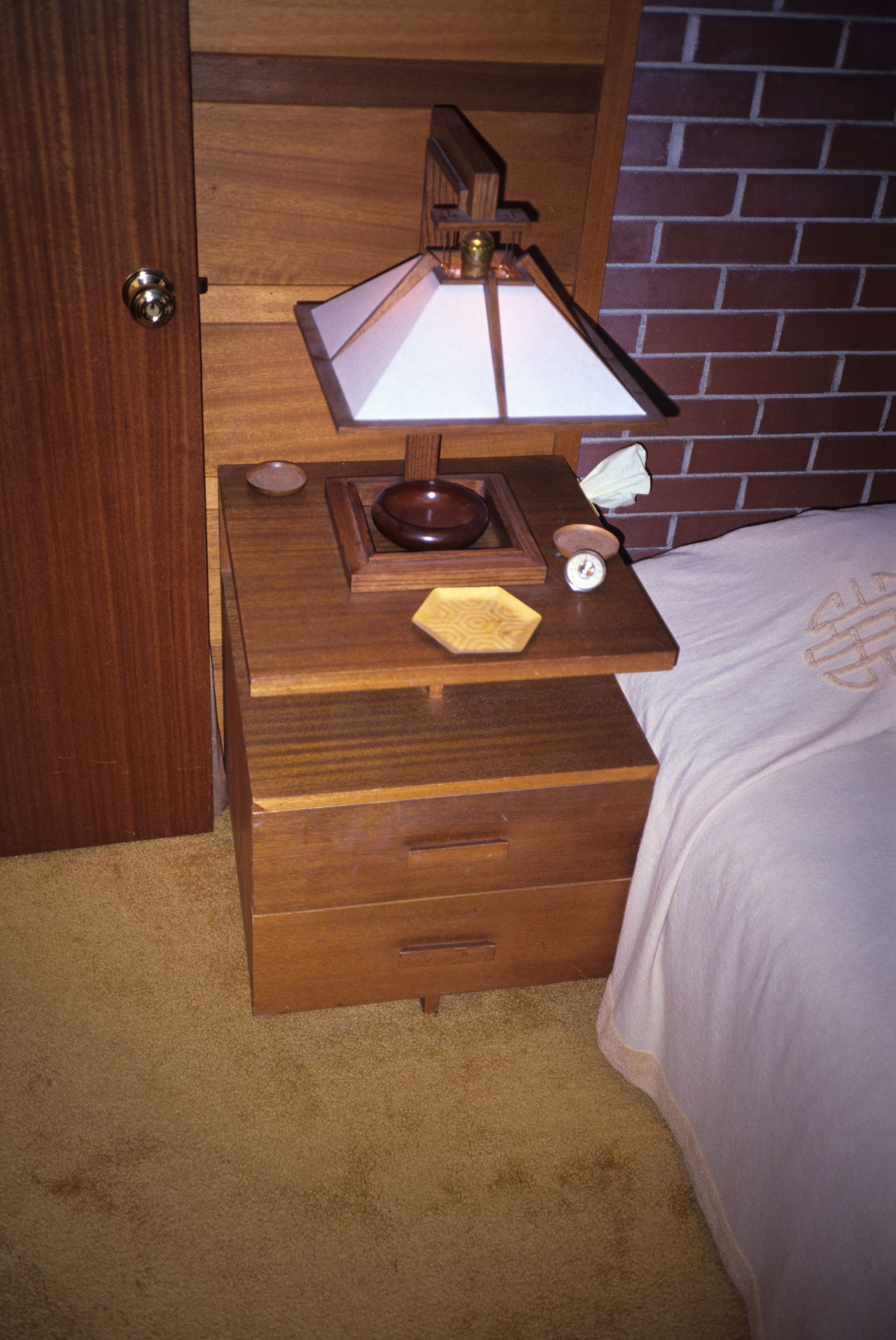
Worth it, yes — but not for the reason the listings push. The appeal is not gadgetry; it is that you can tap a lamp at two in the morning without peering at a switch in the dark. That convenience is real, and so are the quirks: fixed brightness steps, a sensor that occasionally misreads, and behavior that changes the moment you add a smart plug to the outlet.
What tapping actually controls
Every touch lamp replaces the switch with a capacitive sensor, usually hidden in the metal base or a touch ring. One tap turns the lamp on at its lowest level. A second tap moves to medium, a third to full, and a fourth cycles back to off. Better lamps skip that stair-step game with hold-to-dim: you press and the light slides smoothly through its range, releasing wherever it looks right.
The design has a consequence worth knowing before you buy. On a three-level lamp, the middle step carries most of your evenings, because the low step is often a token nightlight and the top step is reading-bright. If the middle step is badly chosen — too dim for a book, too bright for winding down — the whole lamp feels wrong no matter how nice the shade is. That middle step is where manufacturers quietly cut corners.
Where touch control earns its keep
The strongest case is the middle of the night. No switch to find, no cord toggle dangling behind the nightstand, no fumbling that wakes the other person. For anyone with stiff hands or arthritis, a firm tap is genuinely easier than a small rotary knob. And in guest rooms, where nobody knows where the switch hides, a tap-anywhere base removes the guesswork entirely.
The honest weak spot is reliability at the edges. A thick tablecloth, a layer of dust on the base, or wet hands can leave the sensor ignoring taps or double-firing. None of this is dangerous — it is just the kind of small friction you accept in exchange for the convenience. A bare, occasionally wiped base keeps the sensor happy for years.
Sensitivity, steps and sensor placement
We judge touch lamps on behavior rather than spec-sheet numbers, and what we look for comes down to four things.
First-tap response. The lamp should register a normal, unhurried tap the first time. If the listing reviews are full of “have to tap twice,” believe them — that habit never wears off, it worsens.
The floor and the middle. The lowest level should be genuinely low, and the middle level should land where an evening actually happens. Three fixed levels can pass this test; hold-to-dim lamps pass it almost by default.
Standby behavior. The sensor sips power around the clock, but a well-built lamp draws under a watt waiting for you. You will never see this on a listing; it shows up as warmth on the base and pennies on the bill.
The bulb pairing. Touch dimming still needs a bulb that cooperates. A lamp that ships with a warm 2700K dimmable bulb has already done the matching work; if the socket is bare, budget for a dimmable LED or the steps will stutter.
When a dial is still the better call
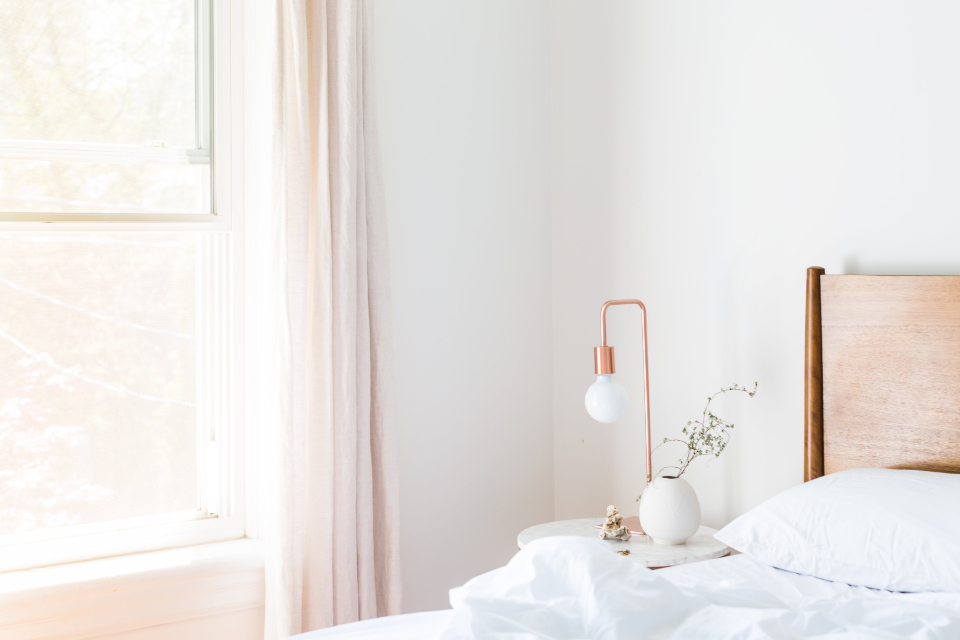
Some readers want the exact same brightness every night, and a rotary knob delivers that with one muscle memory — tap sensors always start from the bottom of the range. Smart plugs create a second conflict: switched at the wall, a touch lamp usually comes back at whatever level it last held, and dimming then needs a tap anyway. If your setup leans on plugs and schedules, a plain switched lamp is the simpler machine. Our bedside table lamps under $60 review covers several dial-dim options alongside touch models. And once dimming is settled, color is the next lever — our 2700K versus 3000K comparison explains why evenings lean warm.
Straight answers
Do touch lamps work with LED bulbs? Yes, provided the bulb is dimmable. Non-dimmable LEDs on a touch dimmer flicker or drop out at the low step. If the lamp ships with its own bulb, that pairing has been tested already.
Can a smart plug control a touch lamp? It can switch the lamp on and off, but the dim level usually resets to the lamp’s last state rather than your preferred one. Treat the plug as an on-off tool and keep dimming at the base.
Why does my touch lamp respond less in winter? Dry winter skin conducts less, and capacitive sensors notice. A firmer tap — palm rather than fingertip — usually sorts it until the heating season ends.
The picks
Hold-to-dim touch lamp with warm LED
Generic contemporary · $35-45 · Rated 4.4/5
Press and slide dimming with a warm included bulb sidesteps every classic touch-lamp complaint — fixed steps and bulb mismatches.
Best for: Anyone who wants smooth dimming without hunting for a switch
- Hold-to-dim slides through the range instead of three fixed jumps
- Ships with a matched warm 2700K dimmable bulb
- First tap lands on a genuinely low level
- Sensor needs a bare, dust-free base to stay reliable
- Standby draw is small but nonzero, unlike a plain switch
Compact three-touch bedside lamp
Generic contemporary · $22-30 · Rated 4/5
The cheapest way to get tap control, with a small base and a usable middle step — accept a token low level and a plastic build.
Best for: Guest rooms, kids' rooms and tight budgets
- Base footprint around six inches, easy on small nightstands
- Middle step suits casual evening use
- Often sold in pairs for under $50 total
- Lowest step is a nightlight, not a wind-down brightness
- Lightweight plastic base slides on polished wood
Touch lamp with USB-C base port
Generic contemporary · $40-52 · Rated 4.2/5
Tap dimming plus a charging port on the base covers two nightstand jobs at once — treat the port as a slow top-up, not a fast charger.
Best for: Nightstands juggling a phone and one outlet
- USB-C port on the base frees the wall outlet
- Metal base doubles as a solid, stable sensor
- Weighted foot resists sliding when you tap
- Port output is slow by modern charging standards
- One more electronic part that can fail before the lamp does
| Model | Touch control | Base footprint | Extras | Bulb | Price |
|---|---|---|---|---|---|
| Hold-to-dim lamp | Stepless hold | 7 in | None | Included 2700K LED | $35-45 |
| Compact three-touch | 3 fixed steps | 6 in | None | Included 2700K LED | $22-30 |
| Touch lamp with USB-C | 4 fixed steps | 7.5 in | USB-C port | E26, not included | $40-52 |
Frequently asked
- Do touch lamps draw power when they are switched off?
- A little. The capacitive sensor stays awake waiting for a tap, so there is a small standby draw — well under a watt on any lamp we would shortlist. Over a year it costs pennies, not dollars.
- Why does a touch lamp sometimes turn on by itself?
- The sensor is reading a change in capacitance, and humidity swings, a shifting tablecloth or nearby electronics can fool it. A firm tap-to-off usually resets things; recurring ghost turns point to a failing sensor.
- Are touch lamps a good choice for a child's room?
- Mostly yes — there is no hot toggle switch and no pinch points, and kids find tapping intuitive. The catch is that tapping becomes a game, so expect the lamp to be switched more often than it is lit.