Bedside Lamps
Small Nightstand, Big Problem: Compact Lamp Picks
If you buy through links on this page we may earn a commission at no extra cost to you.
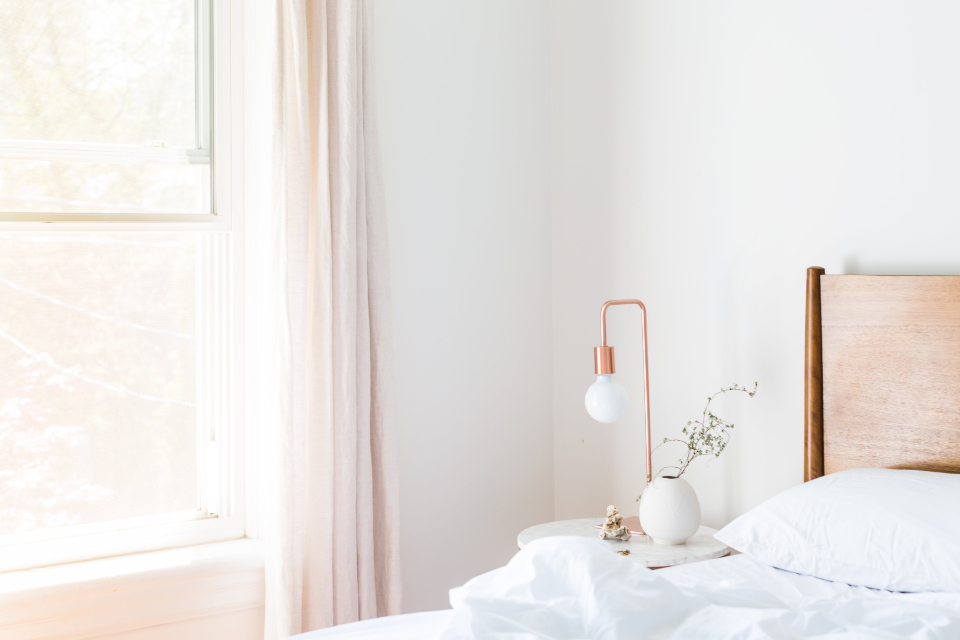
The mistake is shopping by looks. A 14-inch-wide shade dropped onto a 16-inch nightstand leaves no room for the book, the glass of water and the phone, and no amount of styling fixes that. Compact bedside lighting works when you budget the footprint first: roughly a 10-inch shade diameter and 16 to 20 inches of total height, with everything else — color, material, smart features — chosen after the numbers fit.
Measure three numbers before you shop
First, the surface. Measure the nightstand’s top, width and depth, then subtract what already lives there: a book, a phone charger, a glass. What remains is your lamp budget, and on most small tables it is a circle 10 to 12 inches across, not the 14 or 16 that standard lamps expect.
Second, the height. The bottom of the shade should land at seated eye level, which on a typical low nightstand means a total lamp height of 16 to 20 inches — shorter than the 24 to 28 that full-size lamps run. A lamp too tall for a small table crowds the headboard and blocks the view across the room, which makes the whole bed corner feel cramped.
Third, the cord. Small lamps get moved around more, and a 4-foot cord that barely crosses a big nightstand will not reach the outlet from the far corner. Six feet or longer, or plan for a flat plug and a cable channel. The height math in detail is in how tall should a bedside lamp be.
Run the same math for the objects around the lamp, because the surface has to serve two jobs. A paperback lying open takes about 9 inches; a phone on a charging pad takes 4; a tumbler of water takes 3 and a half. Add them to a 10-inch shade on a 16-inch table and you are already over budget — which is exactly how books end up on the floor. On tight surfaces, pick the lamp that stands behind the book’s spot rather than beside it, or accept that the lamp lives at the back corner and aim the shade slightly forward.
Body types that fit tight surfaces
Four silhouettes earn their place on a small table. Slim cylindrical bases — metal or ceramic columns 3 to 4 inches across — hold a 10-inch drum or cone shade while eating almost none of the surface. Globe lamps need zero shade at all, since the diffuser is the body; a 9-inch globe on a low stand is one of the smallest complete lamps you can buy. Adjustable-arm lamps trade a wide pool for a tight, aimed one, which suits readers who accept a cone of light instead of room glow. And wall-mounted arms remove the footprint question entirely, which we will get to below.
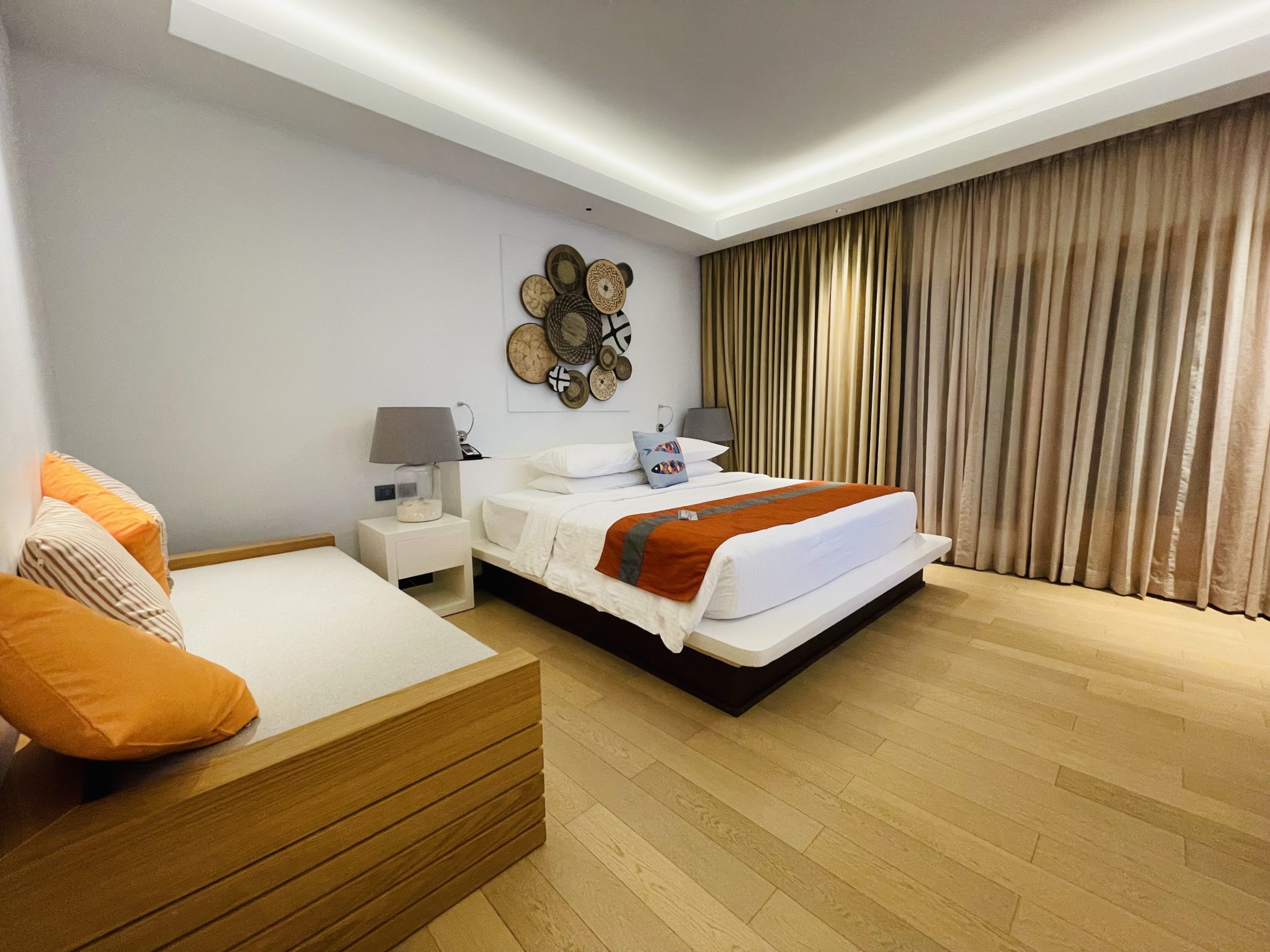
What to avoid: wide urn-shaped bases, lamp-plus-shade combos where the shade is nearly the size of the base, and anything sold as a “mini lamp” with a shade under 8 inches — those usually carry a bulb too weak to read by.
A note on depth, since it gets forgotten: on a nightstand against a wall, the lamp can take the back half of the table while the book and the glass take the front half. Slim bodies make that split work; a 10-inch-deep base makes it impossible. If your table is narrow front-to-back but long side-to-side, favor a lamp that is shallower than it is wide, and let the shade overhang toward the bed rather than the wall.
Features that earn their footprint
On a crowded table, features do work that surface area cannot. A touch dimmer or a pull chain saves the reach-around that a rotary switch on the back of the base demands. A USB port in the base deletes one charger from the surface. A rechargeable cordless lamp deletes the cord entirely, which matters when the outlet is behind the bed and unreachable — see cordless table lamps for the bedroom for the battery trade-offs.
Honestly, the compact lamp market is flooded with 200-lumen trinkets that photograph beautifully and read terribly; at small sizes you are choosing which compromise to live with, and reading light is the compromise worth protecting. Buy small, but buy bright.
One feature to skip on small tables: built-in wireless charging pads. They sound like footprint savers, but the pad adds a metal plate ring to the base that forces the lamp wider, and most charge a phone only in one exact position — which your lamp corner rarely matches. A separate 4-inch charging pad on the nightstand does the same job, costs a third as much, and can move when the lamp needs the space.
Under 14 inches wide? Skip the table lamp
Past a certain point the math stops working. A nightstand narrower than 14 inches — or one shared with an alarm clock, a humidifier and a sleeping cat — cannot fit a lamp and remain useful. That is the cue to move the light off the furniture: a wall-mounted reading light at seated eye level puts the beam where a table lamp would, costs nothing in surface area, and renters can do it without drilling. The no-drill options are laid out in wall-mounted reading lights for renters, and if a small table lamp still wins, the value picks in bedside table lamps under $60 include several slim bases that fit this brief.
Frequently asked
- How tall can a bedside lamp be before it looks wrong?
- Keep the bottom of the shade at or slightly above seated eye level — roughly 24 to 28 inches of total lamp height on a standard nightstand. Past headboard height with a wide shade, the lamp starts to visually dominate the bed, not just serve it.
- Is it acceptable for the lamp shade to nearly touch the wall?
- Mechanically yes, optically no. A shade pressed against the wall leaves a bright crescent on the paint and blocks the upward light that makes a small room feel bigger. Leave at least 2 inches behind the shade for airflow and light distribution.
- Are compact lamps bright enough for actual reading?
- The good ones are. Look for at least 400 lumens or a dimmable bulb you can push high — plenty of small lamps carry a 450-lumen bulb without any size penalty. What compact lamps rarely support is a wide, even pool of light, so aim matters more than usual.