Bedside Lamps
Taming the Cord: Bedside Lamp Cable Ideas
If you buy through links on this page we may earn a commission at no extra cost to you.

Nobody photographs the lamp cord, and yet it is the one part of a bedside lighting setup that actually bites you. It snags your foot in the dark, it drags the lamp off the nightstand when you yank the phone charger, and it is the reason the lamp ended up plugged into that sketchy power strip in the first place. Ten minutes of cord planning fixes all of it, and the options below run from free to about $20.
Why the bedside cord is worth ten minutes
The nightstand cord has a uniquely bad job compared with every other cord in the house. It lives at foot-and-ankle height next to a walking path, it gets plugged and unplugged more than any other lamp in the home, and it sits in the same strip as chargers, humidifiers and phone cables that all want the same outlet. Most nightstand chaos is really an outlet budget problem: one outlet, four devices, zero planning.
Sort the outlet budget first. The lamp usually deserves the wall outlet, and everything low-draw — phone charger, watch puck — can share a compact power strip mounted inside or behind the nightstand. Then the remaining question is purely how the lamp cord travels the last three feet.
Four ways to route it, ranked from cheapest
1. Route through the furniture. Many nightstands have an open back panel or a cable grommet in the top. Run the cord up through the grommet or the back, so the visible length drops from six feet to six inches. Cost: nothing. If your nightstand is solid-backed, a single 1-inch hole drilled low in the back panel does the job — do it in the back, not the top, and the furniture never looks modified.
2. Cord clips and channel raceways along the baseboard. Adhesive clips every 8 inches keep the cord flat and lifted off the floor where feet travel. A slim paintable raceway takes it a step further and hides the run completely; it is the standard renter-safe method because it peels off without damage. If your setup involves more than one cable, our renter-friendly lighting upgrades guide covers the no-drill version in detail.
3. Coil and shorten. If the cord is simply too long — 8-foot cords on a nightstand 2 feet from the outlet — coil the excess in loops of 4 to 5 inches, bundle with Velcro ties, and stash the bundle behind the nightstand. Never coil it so tight that the cord kinks, and keep the bundle away from anything that gets hot.
4. Go cordless. A rechargeable bedside lamp eliminates the cable instead of managing it. The honest trade-off: you trade a cord you see once a week for a battery you must remember to charge. Look for at least 20 hours of rated runtime and a USB-C port. Our look at cordless table lamps covers what separates good ones from toys.
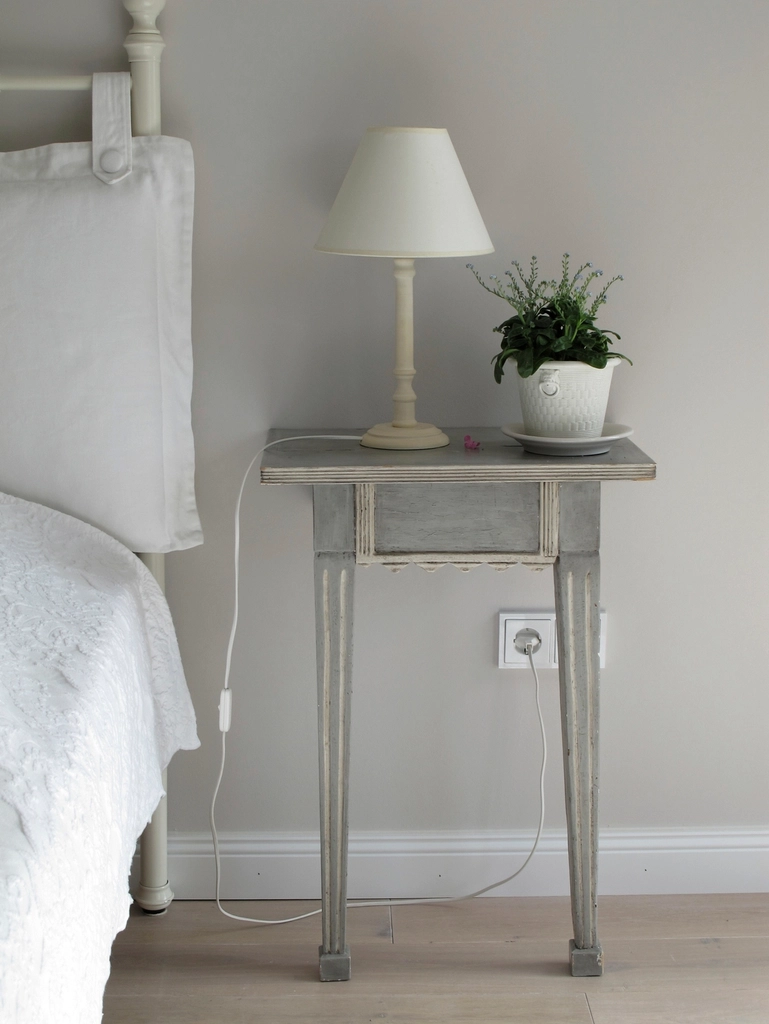
A ten-minute tidy that actually holds
Method picks come down to furniture and outlet placement, but execution decides whether the fix lasts a month or a decade. This is the sequence that works:
- Unplug everything on the nightstand and lay the cords out on the bed. Seeing the full tangle once is worth more than any advice.
- Decide the outlet budget — lamp to the wall, low-draw devices to a single compact strip — and place the strip first, ideally velcroed to the back panel of the nightstand where it never moves again.
- Run the lamp cord through the furniture path or along the baseboard, clipping or raceway-ing every 8 inches so no loop hangs in foot traffic.
- Coil and bundle the leftover cord behind the furniture, then give the whole run one final pull test: tug the lamp gently forward and watch whether any cord drags with it. If it does, something is pinched or snagged.
Step four catches the mistakes that undo the other four. A cord that moves when you nudge the lamp will work loose within weeks, and loose cords migrate straight back under your feet.
Three things that create hazards instead
Daisy-chained power strips. A strip plugged into a strip behind a nightstand is the single most common fire-starting setup inspectors flag in bedrooms. One strip, plugged into the wall, carrying the lamp and chargers only, is fine.
Stapled or pinched cords. Staples crush insulation and the short does not show up for years. Clips grip; staples cut. Same for doors and drawers that close on the cord — check that a drawer full of clothes does not squeeze the cable every time it shuts.
Frayed ends ignored. A cord with visible copper or a plug that wiggles in the outlet has reached the end of its life. Lamps are cheap; the replacement cord set is cheaper. Replacing a lamp over a $10 plug repair is defensible and nobody will judge you.
One question worth answering before all of this: how long is too long? Most table lamps ship with 6-foot cords, some with 8, while a nightstand 2 feet from a wall outlet needs perhaps 4. That excess does not merely look sloppy — every coiled loop under a nightstand is a snag point for a foot, a vacuum, or a cat. When you shop for a replacement lamp, cord length belongs on the same short list as shade size and switch type, because the three together decide whether the bedside corner looks finished or perpetually half-wired.
One last honesty note: the perfect cord setup is invisible, which means nobody will ever compliment it. That is the point. The compliment you get is not hitting the lamp with your toe at 3 a.m.
Frequently asked
- Is it safe to run a lamp cord under a rug?
- For a lamp drawing under an amp, a cord under a rug along a wall is low risk, but it is still the weakest option: foot traffic wears the insulation over years and you cannot inspect the cord. A cord cover or raceway on the wall is safer and barely more visible.
- Do cordless bedside lamps actually work as replacements?
- Modern ones do for ambient and reading use, with 20 to 60 hours per charge depending on brightness. The trade-off is remembering to charge them — set a weekly reminder or you will hit the dark-lamp moment at bedtime.
- Can I cut a lamp cord shorter?
- Not safely unless you know how to rewire a plug. Coiling the excess and securing it with Velcro ties achieves the same result in two minutes with zero risk.