Ceiling Lights
Flush vs Semi-Flush Mount: The Real Difference
If you buy through links on this page we may earn a commission at no extra cost to you.
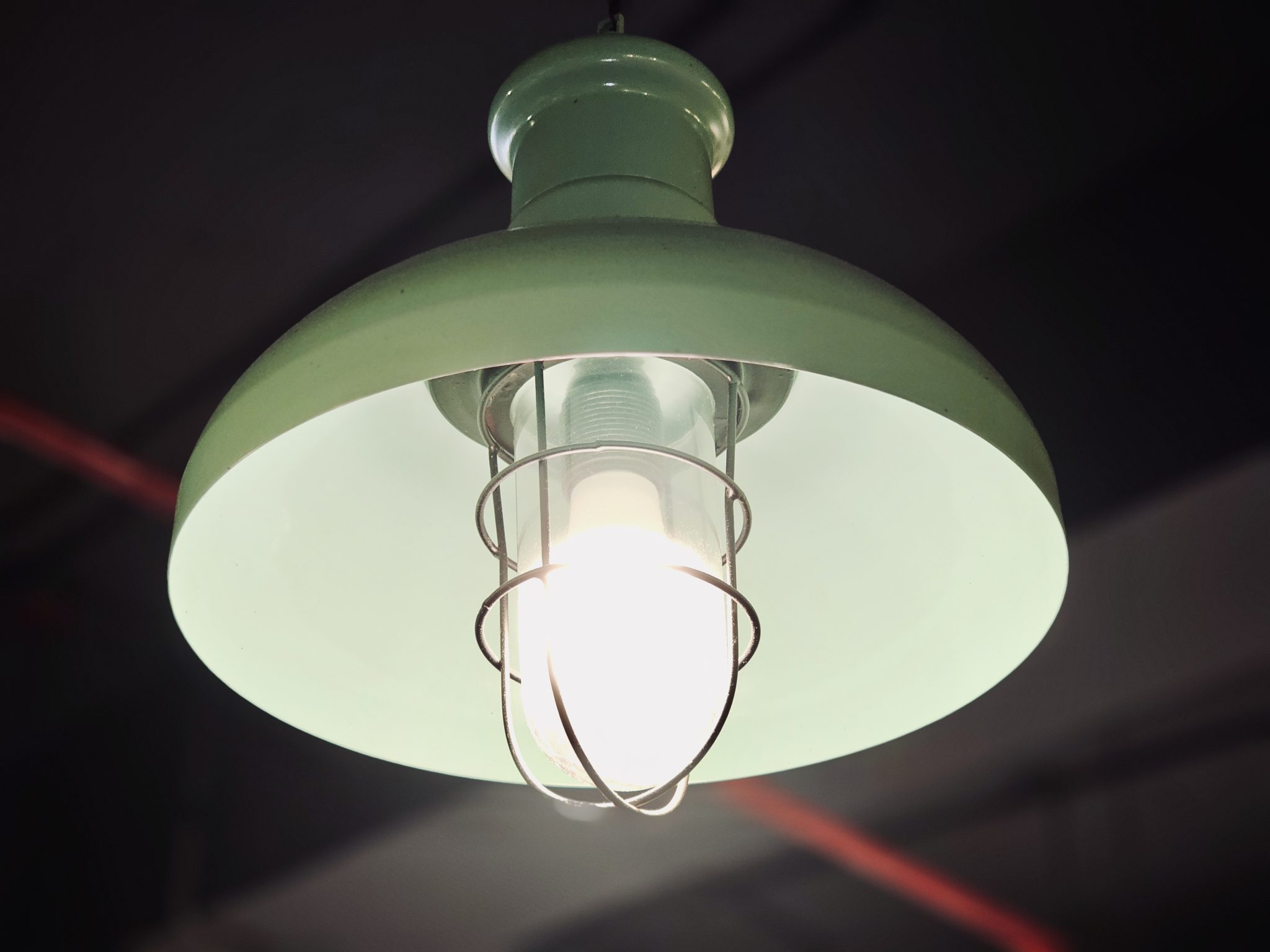
A flush mount screws directly against the ceiling; a semi-flush hangs from a stem a few inches long, leaving a gap between shade and ceiling. That gap is the entire difference — in installation, in light quality, in cleaning schedule, and in what the fixture does to a low bedroom ceiling. Everything else, the wiring and the box, is identical, which is why the two categories get compared at all.
Size follows the same logic. Because a semi-flush carries its shade on a stem, manufacturers build them wider — 16 to 22 inch drums are common — while flush mounts top out smaller before the shade starts fighting the drywall. If the room wants one big statement light instead of several small ones, the semi-flush category is where the big, affordable drums live.
The hardware, in one paragraph
Both types attach to the same round ceiling box that every bedroom already has, with the same two or three wires and the same bracket. A flush mount’s shade clips or twists directly onto a fitter ring at the base. A semi-flush adds a stem — anything from 3 to about 10 inches — between box and shade. Because the shade hangs below the stem, semi-flush fixtures accept larger, brighter bulbs and heavier shades without the heat or weight sitting against drywall. If you can change one, you can change the other; no electrician required for either swap in a straightforward fixture replacement.
What the gap does to the light
A flush mount is a downlight with a cap on it. Nearly all its output leaves the bottom diffuser, so it lights the floor plane efficiently and does a fine job as the room’s single ambient source. The trade-off: the ceiling above it stays dark, and rooms lit only by flush mounts can feel like the light stops at head height.
The semi-flush sends 20 to 40 percent of its output upward through that gap. The bounce off the ceiling raises perceived brightness everywhere — corners, closets, the shadow zone behind the door — at the same lumen rating. It is the closest a budget fixture gets to the soft ambient wash of cove lighting without any construction. The cost is a bit less light on the floor plane and one more surface (the shade’s top) collecting dust.
The unglamorous truth: for most buyers, the daily difference comes down to bulb access. Flush mount shades with two thumb screws and a glass globe balanced over your head are a chore; semi-flush shades usually lift or hinge down. If you change bulbs twice a year, that accessibility quietly matters more than any photometric argument.
Diffuser quality splits both categories. A cheap flush mount with a thin white diffuser shows a bright hotspot directly under the bulb, which is exactly the spot where your eyes land when you glance up from bed. Better fixtures solve it with frosted glass, a double-layer diffuser, or LED modules spread across the base instead of one central bulb. Whatever the mount type, hold a phone flashlight behind the diffuser in the store if you can — hotspots are visible in seconds and invisible on the box.
Which one belongs in your bedroom
Height decides first. Under an 8-foot ceiling, or anywhere the fixture sits above a walkway, a flush mount is the safe call — the bottom of any fixture should clear 7 feet from the floor, and the full rules live in our ceiling light height guide. Over an open floor area or the foot of the bed in a room with 9-foot ceilings, a semi-flush works and looks better doing it.
Room style leans in next, less because either type is more attractive than because they suit different shapes. Flush mounts read best as quiet discs and squares that let bedding, art and headboard carry the room. Semi-flush fixtures, with their visible stem and shade silhouette, act more like furniture — fabric drums soften a boxy room, metal and glass versions sharpen a modern one. Trying to make a flush mount a design statement usually ends in an awkward scale problem; its job is to vanish.
Then match the fixture to the room’s job. If it is the only ceiling light in the room, favor a semi-flush with a wide, open-bottom shade for maximum spread, and dim it with the wall switch. If the ceiling fixture is just the morning-and-cleaning layer above a lamp-filled room — the setup our bedroom ceiling light ideas explore — a flush mount’s downlight efficiency suits it fine. Budget note in passing: both categories run $25 to $120 for solid, dimmable LED versions; above that you are paying for glass, finish and brand, not photons.
The short version
Flush for low ceilings, walkways and easy cleaning; semi-flush for spread, softness and rooms tall enough to spare the inches. When in doubt in a bedroom, semi-flush wins more often than not — the ceiling bounce flatters a room you experience lying down, and bulb changes stop being a two-person job. Measure the ceiling height and the fixture’s drop before ordering, and the rest of the decision is taste.
Frequently asked
- Can you convert a flush mount to a semi-flush?
- Often, yes. Both mount to the same ceiling box with the same wiring, and many brands sell the shades and stems separately. Check that the added stem does not drop the fixture below 7 feet of clearance in a walkway.
- Which works better on an 8-foot ceiling?
- Flush mount, especially over walkways and door swings. A semi-flush can work over an open floor area or the bed if it hangs no lower than about 10 to 12 inches from the ceiling.
- Do semi-flush fixtures waste light upward?
- No — that upward spill is the feature. Light bouncing off the ceiling raises the ambient level and kills the cave effect, which is exactly why semi-flush fixtures feel softer than flush ones of the same lumen rating.