Ceiling Lights
Ceiling Fan Light Kits for Bedrooms
If you buy through links on this page we may earn a commission at no extra cost to you.
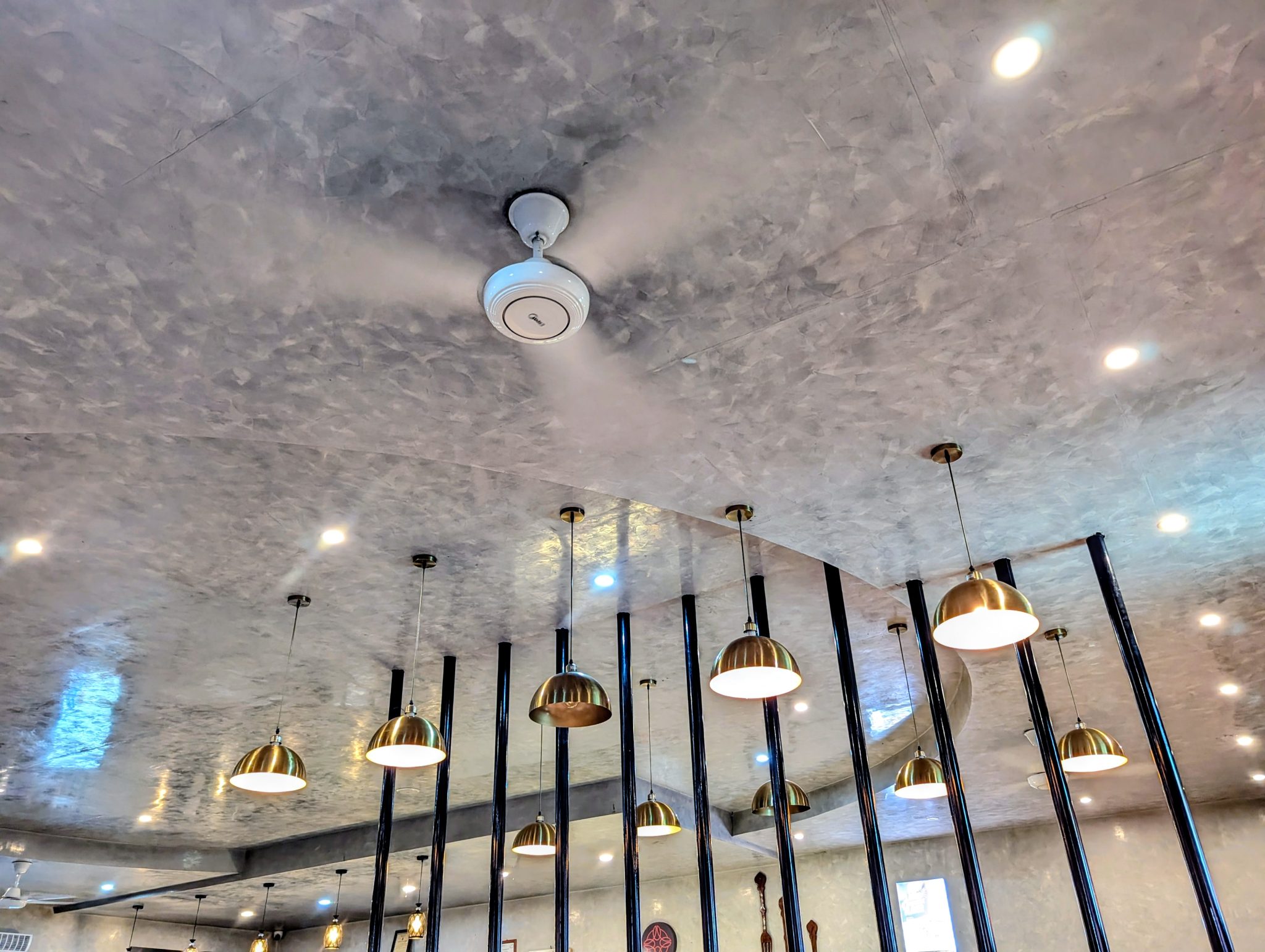
A ceiling fan with a light kit solves two bedroom problems in one purchase — moving air and general light — and creates a third if you choose badly, because the light and the fan end up sharing a fixture, a switch and a ceiling full of moving parts. The kits are cheap and easy to find; the ones you will not regret share a few specific traits. Here is what to weigh before buying.
What a light kit actually is
The kit is the assembly of shade or glass bowl, sockets, diffuser and pull chain that sits at the center of the fan. On most fans it attaches below the motor housing with a twist-lock ring or a few screws. Kits come in three broad styles: an uplight bowl that mounts on top of the motor housing and bounces light off the ceiling, a downlight bowl that hangs beneath and directs light downward, and bare multi-arm or cage designs with exposed bulbs.
For bedrooms, the downlight style wins on practical grounds. An uplight looks elegant and bounces a soft wash off the ceiling, but it lights the ceiling, not the room — under a bowl uplight, reading anything at night is a losing proposition. Downlight kits with a frosted bowl put usable light where you actually move around: the floor, the closet path, the nightstand area.
Check one compatibility detail before buying any kit for an existing fan: the switch housing. Kits attach to the fan’s switch cup, and fans differ in whether that cup accepts an accessory — a threaded hole plus an internal wiring plug means a manufacturer kit will fit; a sealed housing means no kit will, whatever the third-party listing promises. Fans sold with “light kit adaptable” in the specs take the guesswork out. If the fan was bought for the light as much as the airflow, buying the two together as one unit sidesteps the compatibility question entirely and usually costs less than fan plus separate kit.
Glass, bulbs and dimming: the three real decisions
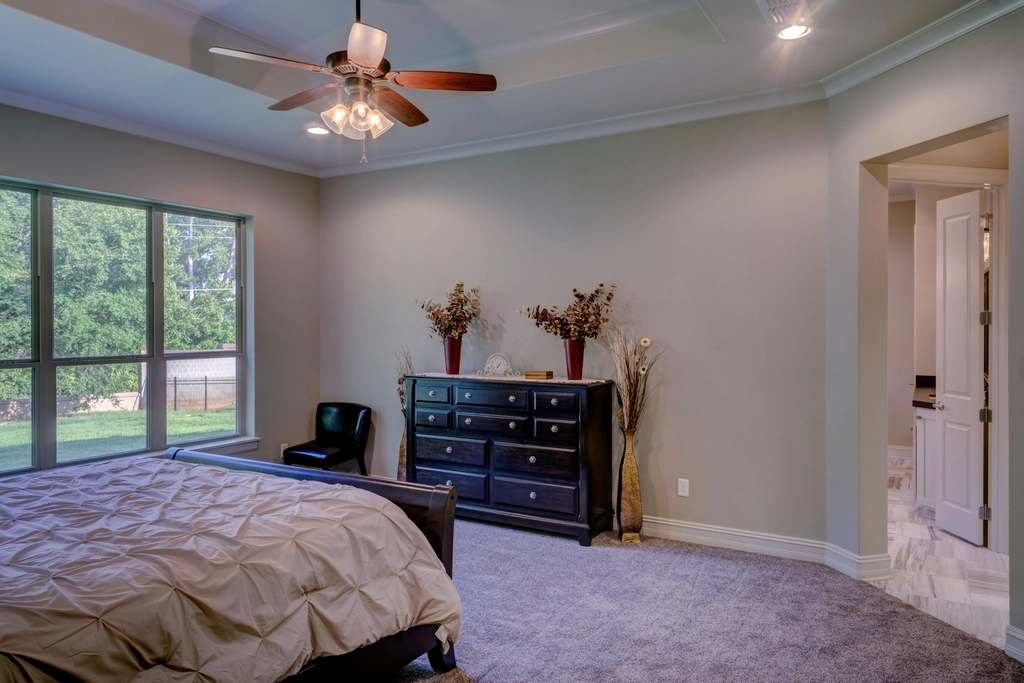
The diffuser sits in your sightline. Unlike every other fixture in the bedroom, a fan light kit is dead-center overhead — you stare directly at it while lying in bed. Thin glass that shows bulb hot spots is far more annoying here than on a wall fixture. Look for thick frosted glass or an opal bowl, and favor kits with two or more sockets spread apart over single-bulb designs, because multiple sources behind one diffuser even out the glow.
Bulbs decide the evening. Most kits now take standard E26 dimmable LED bulbs, which is good news: pick 2700K and the room feels like a bedroom, pick 4000K and it feels like an examination room. Aim for 800 to 1,000 lumens total for general light — enough to move through the room safely, not so much that the fan reads as the room’s only light source. Our bedroom ceiling light count guide puts that number in room-scale context.
Dimming is worth the extra few dollars. A fan light at full brightness at 11 p.m. is exactly as pleasant as it sounds. Kits wired for a compatible wall dimmer — or fans with a remote that dims the light separately — let the fixture become usable evening light instead of an all-or-nothing glare bomb. If dimming compatibility is confusing, our guide to dimmable bedroom ceiling lights covers the switch-fixture-bulb chain.
Separate controls are the hidden dealbreaker
The single most useful feature in a bedroom fan light kit is independent control of light and fan. Picture the daily scenario: you want light, not wind, in February — or air, not light, in July. A kit tied to the fan’s single pull chain forces both to toggle together, and honestly you will use the fan less because of it.
Three routes to independence exist. A remote-controlled fan handles it out of the box and is the simplest for retrofits. A wired dual-switch ceiling box — two wall switches feeding the fan separately — is the cleanest if the box already has separate wiring. A smart wall module or smart bulbs in the kit achieves it too, adding app control at the cost of a small tech setup.
Remotes deserve one caution: they live on nightstands, which means they fall behind beds constantly. A fan with a wall-mounted remote cradle near the door, or a model whose light responds to a wall switch in addition to the remote, spares you the nightly hunt. And if the household includes guests — kids, in-laws, anyone staying less than a week — every layer of control that does not require an app pays for itself immediately.
Noise, wobble and the winter reality
The light kit itself is silent, but it lives inside a moving machine. Cheap kit shades can rattle against the housing when the fan runs at high speed — a problem fixed with a strip of felt between glass and housing, or avoided by buying a fan whose kit is designed to sit snug. Wobble is a fan balance issue, not a light issue, but an unbalanced fan makes the light’s shadow swing visibly across the walls, which annoys people more than the wobble itself.
One last seasonal note: in winter you will run the fan on low reverse to push warm air down, and the light will still be in your sightline at close overhead range. A diffuser that looks fine in a store becomes a bright eye-level annoyance when the fan runs slow and reverse — one more reason to overinvest in diffuser quality and dimming rather than in motor style or blade finish.
Frequently asked
- Can I add a light kit to a fan that has none?
- Sometimes. Fans with a threaded hole in the switch housing and a wiring connection inside accept a manufacturer light kit; fans without those provisions do not. Check the model number against the maker's accessory list before buying a kit.
- Can the fan and the light work on separate switches?
- Yes, if the ceiling box has separate wires for both — common in bedrooms built for fans. Otherwise the fan remote usually provides independent light and fan control, which is the easier retrofit.
- Is a fan light bright enough to read by?
- Usually not from the pillow. A kit producing 800 to 1,000 lumens lights the room fine, but a reading position needs light close by — most bedrooms still keep a bedside lamp as the second layer.