Bedside Lamps
Dimmable Bedside Lamps That Actually Go Low
If you buy through links on this page we may earn a commission at no extra cost to you.
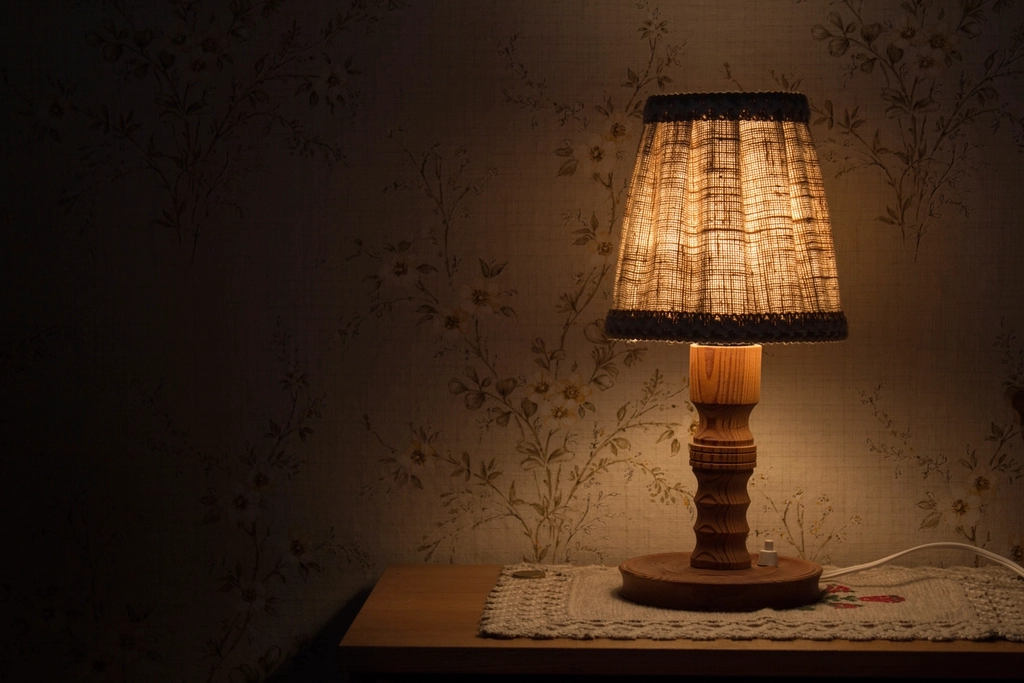
Most lamps sold as dimmable never get anywhere near as low as an evening needs. The switch steps down from full brightness to roughly thirty percent, then stops — and thirty percent of a 450-lumen lamp still feels like office lighting at eleven at night. A bedside lamp that actually goes low reaches a candle-level floor, around five percent of full output, and holds it there without flicker or color drift.
The lowest step is the one that counts
Marketing photos show lamps at full brightness, so almost nobody shops by the bottom of the dimming range. But think about how the lamp actually gets used: full output for maybe twenty minutes of reading, then a long slide down as the evening winds up. The last hour of the night happens at the floor of the range, not the ceiling.
The failure pattern is predictable. Cheap three-step lamps offer 100 percent, 50 percent, and a nightlight setting that misses in one of two directions — either visibly brighter than you want, or so dark that the color turns harsh and cold. Stepless dimming solves this, and so does a well-designed four-step switch with sensible spacing between levels.
A quick way to judge before buying: from listing videos or in the store, hold the lamp at its lowest setting for thirty full seconds. Your eyes need that long to adapt. If the lowest step still feels like task lighting once your eyes have adjusted, the lamp will quietly annoy you every night. If the glow settles into something you could fall asleep beside, you have found a keeper.
What we look for when the box says dimmable
We sort dimmable claims against four criteria, in this order of importance.
Minimum output comes first. A genuine low setting lands at or below five percent of full output — roughly 15 to 25 lumens from a 450-lumen lamp. Listings rarely state the number, so look for photos taken in a dark room rather than staged bright shots.
Dimming curve comes second. Even a stepless dimmer can be badly spaced: some run through their whole range in the top quarter of the dial and do nothing at the bottom. Good designs spread the steps so each change feels proportional to the movement of your hand.
Flicker and buzz come third. On low settings, a poorly matched bulb and dimmer can produce flicker your eye barely catches but your brain registers as fatigue. A trick worth knowing: point your phone camera at the lit lamp on low — rolling dark bands across the screen suggest a dimming circuit that is misbehaving.
Control position comes last. A rotary knob on the base beats a switch on the cord halfway across the room from your pillow. And if the lamp uses a sealed LED module instead of a standard socket bulb, the dimming range you buy is the only one you will ever have.

The bulb half of the problem
Here is the honest part: the bulb matters as much as the lamp, and it is the half most people forget. An LED bulb labeled dimmable can still bottom out around ten percent, well above the candle-low floor you want. Cheaper dimmable LEDs also drift cold and harsh as they dim, which is the opposite of what a bedroom needs at night.
If the lamp takes a standard E26 bulb, two paths work well. Warm-dim bulbs — sometimes labeled dim-to-warm — start at 2700K and slide toward 2200K as they dim, mimicking how an incandescent filament cooled. And if you go the smart bulb route, skip the lamp’s own dimmer entirely: chaining a lamp dimmer and a smart bulb’s app dimming in series is the fastest way to get stuttering, dropped connections and strange minimums. Pick one brain and let it win.
Output still matters at the top of the range. Our guide on how many lumens a bedside lamp needs breaks the numbers down by task; the short version is that a dimmable lamp in the 450 to 500 lumen range covers every job from late-night reading to a barely-there glow.
A two-minute pre-purchase check
Before you click buy, run this list:
- The listing or a reviewer photo shows the lamp lit at its lowest setting in a dark room
- Dimming is continuous, or at least four well-spaced steps
- The bulb is included and replaceable — standard E26, not a sealed module
- Any bulb you supply is labeled dimmable and warm, 2700K or lower
- The control sits on the base, reachable without getting out of bed
Skip any lamp that fails the first one. Honestly, everything else on this list is negotiable — a lamp whose floor is too bright will lose to a cheaper lamp that dims properly, every single time. If you want a wider shortlist beyond dimming, our affordable bedside table lamp review covers shade quality, footprint and the other details that separate good from cheap.
Straight talk
Does dimming an LED bulb make it last longer? Usually, yes — lower output means a cooler driver and less stress on the diodes. It is not a dramatic effect, but dimming is gentle, not harmful.
Why does my lamp still glow faintly after switching off? Some LED bulbs and dimmer circuits leak a trickle of current, and a faint afterglow is the harmless result. If it bothers you, swapping to a different dimmable bulb usually clears it.
Do dimmer switches waste electricity at low settings? No. A lamp dimmed to a quarter of its output draws far less power than at full brightness. Old rotary dimmers burned off a little heat, but the loss is small and modern designs are tighter.
The picks
Stepless rotary-dim table lamp
Generic contemporary · $40-55 · Rated 4.5/5
Smooth dial dimming with a true candle-low floor, a lined linen shade and a weighted base — the least-compromised dimmer in this bracket.
Best for: People who dim the lamp down every night
- Continuous dial from full brightness down to roughly 5 percent
- Lined shade with a diffuser, no hot spots at low settings
- Rotary control on the base, reachable without leaving the pillow
- Bulb not always included, and it must be a dimmable LED
- Plain look that suits minimal rooms more than decorative ones
Warm-dim LED bedside lamp
Generic contemporary · $55-70 · Rated 4.3/5
A built-in LED that slides from 2700K toward 2200K as it dims — the most convincing wind-down glow here, at the cost of a light source you can never replace.
Best for: Evening wind-down rituals and amber-glow fans
- Dim-to-warm color shift, not just brightness reduction
- No bulb shopping and no dimmer-bulb mismatches
- Slim footprint fits narrow nightstands
- Sealed LED module cannot be replaced when it eventually fades
- Lower peak output than the bulb-based picks
Three-step touch table lamp
Generic contemporary · $25-35 · Rated 3.9/5
The budget route: tap dimming that is convenient at night, with the middle step doing most of the work and a high floor that serious readers will feel.
Best for: Guest rooms and casual readers on a budget
- No switch to hunt for in the dark
- Usually ships with a warm 2700K bulb included
- Compact base under seven inches wide
- Lowest step sits well above a true candle-low
- Fixed steps leave no fine control between levels
| Model | Dimming | Lowest output | Bulb | Base width | Price |
|---|---|---|---|---|---|
| Stepless rotary-dim lamp | Continuous dial | About 5 percent | E26, not included | 7.5 in | $40-55 |
| Warm-dim LED lamp | Continuous, color-shifting | About 4 percent | Sealed LED module | 6.5 in | $55-70 |
| Three-step touch lamp | 3 fixed steps | 15-20 percent | Included 2700K LED | 6.5 in | $25-35 |
Frequently asked
- Can I make a regular lamp dimmable without buying a new one?
- Often yes. An inline cord dimmer rated for LEDs, or a dimmable smart bulb, adds a low range to almost any lamp with a standard socket. Both add one more part that can fail, so keep the receipt.
- Is running an LED bulb at its lowest setting bad for it?
- No. Dimming reduces heat and stress on the LED driver, so low settings are gentle rather than harmful. Flicker or buzzing on low points to a bulb-dimmer mismatch, not damage.
- How low should the lowest step actually go?
- For late evenings you want roughly 5 percent of full output, or about 15 to 25 lumens from a 450-lumen lamp. If the floor sits above 10 percent, you have a reading light, not a wind-down light.