Ambient Light
Fairy Lights in a Bedroom: Tasteful, Not Dormy
If you buy through links on this page we may earn a commission at no extra cost to you.
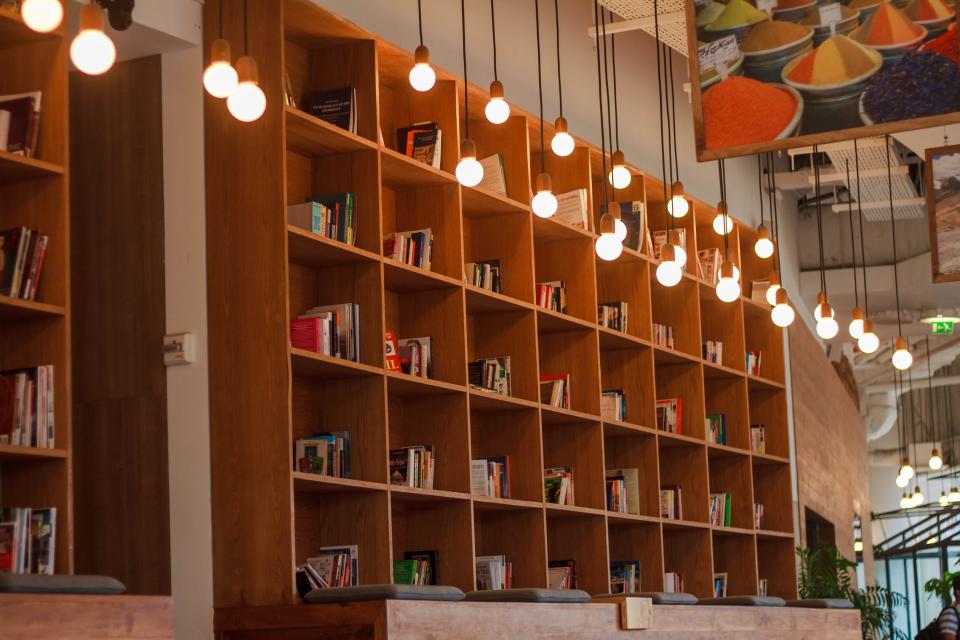
Nobody hangs fairy lights planning to regret them. But six months on, the sagging cool-white strand above the bed looks less like coziness and more like a dorm room moved in for the semester. The line between tasteful and dormy was never about whether fairy lights belong in a bedroom — plenty of designed rooms use them. It is about three decisions made before the strand goes up: density, color temperature, and whether the light is doing a job or just existing.
The two mistakes that read as dorm room
Both mistakes are visible from the doorway, and both are cheap to avoid.
Mistake one: cool white. Fairy lights sold as “cool white” or “daylight” run at 6000K and up, and under them a bedroom reads like a display case. Fair warning: a lot of strands marketed as “warm white” are actually closer to 4000K, a neutral that still leans clinical after dark. Check the listing for an explicit Kelvin figure and hold out for 2200K to 2700K. This one spec does more for the outcome than every styling trick combined.
Mistake two: too much strand. Three loops of lights around a bed frame, a window and a corkboard is not one design decision — it is three separate ones stacked until the room hums. Density is what separates “designed” from “dorm”: one or two runs of lights, deliberately placed, beat a tangle of fifty feet every time. A related tell is visible infrastructure — sagging wire, dangling loops, tape corners peeling off the wall. If the mounting shows, the strand reads as temporary, and temporary is the whole dorm aesthetic.
Three arrangements that look designed
Each of these uses a single strand, hides its hardware, and gives the light a surface to land on — which is the actual secret behind the “designed” look.
Along the headboard shelf. A run of lights tucked behind the ledge of a headboard or a wall-mounted shelf throws an even wash up the wall behind the bed. The strand itself disappears; only the glow shows. This is the highest-leverage placement in the room, and it overlaps with the washes described in lighting behind the bed.
Woven through texture. Threaded loosely through a rattan headboard, a macramé hanging or the slats of a wood frame, the points of light break up into scattered sparkle rather than a continuous line. The rule is restraint: weave through, do not wrap, and let the material hide the wire.
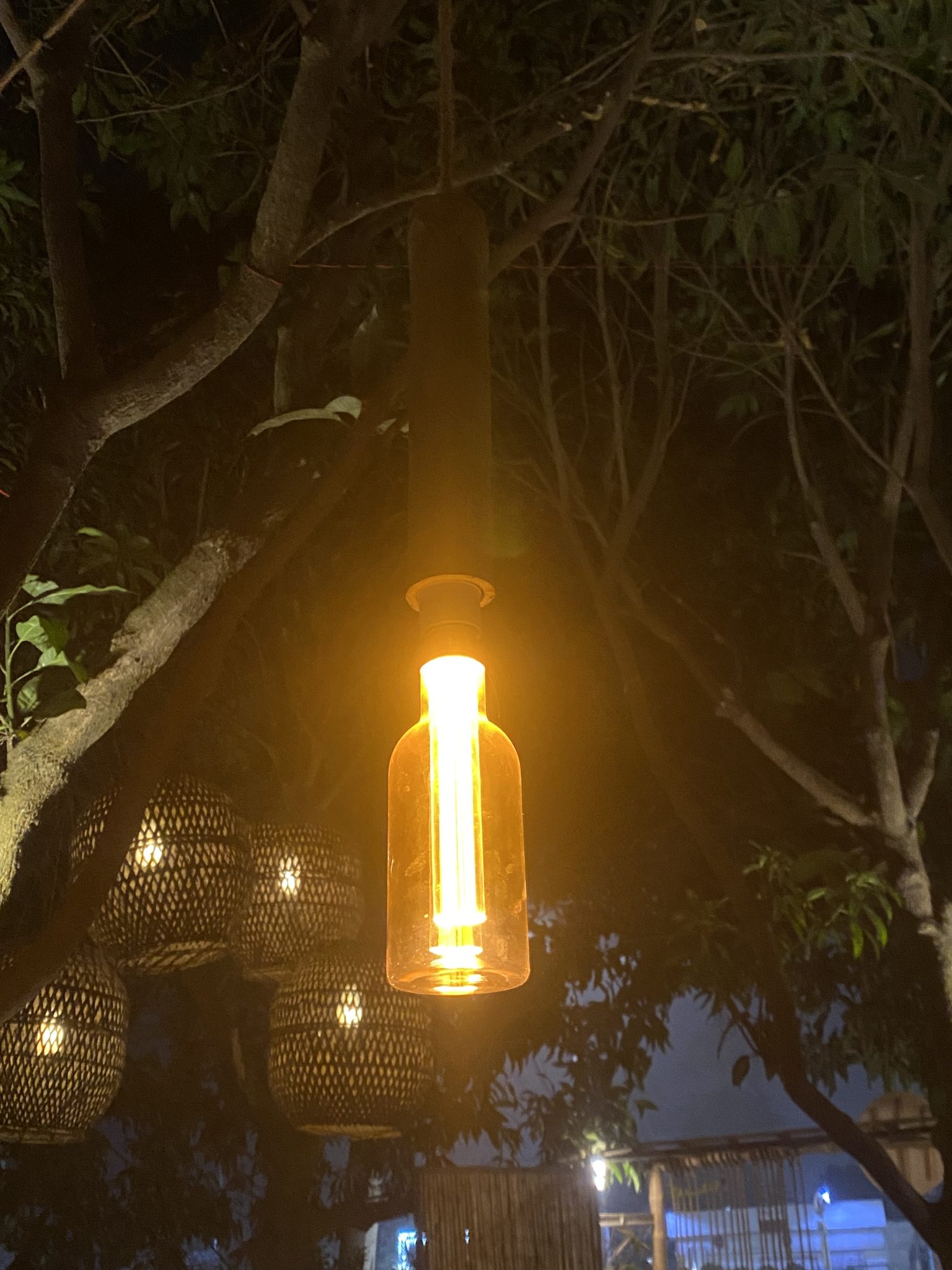
Clustered in glass. Coiled inside a cloche, a jar or a glass vase on the nightstand, a short strand becomes an accent lamp with its battery box fully hidden. This one earns its place twice — it looks deliberate by day and throws a genuine candle-low pool of light by night, close to the effect covered in our flameless candle guide.
Choosing the strand: wire, spacing and control
The strand itself splits into a handful of specs worth checking before checkout.
Wire color. Copper wire nearly vanishes against wood and textiles; green-coated wire disappears into plants; black-coated wire suits dark walls. On a headboard, the thin copper style is the safe default — at a distance you see only the points of light.
LED spacing. Points spaced 2 to 4 inches apart read as a gentle scatter; dense spacing under an inch reads as a rope of light. For the headboard wash, looser spacing looks more designed. For a jar cluster, dense packing fills the glass better.
Power and control. Battery strands free you from outlet placement and cost little, but plug-in strands with an inline dimmer and timer are the ones that survive nightly use. A dimmable strand covers both moods — sparkle for the first hour, candle-low after — which a fixed-output strand cannot. Output needs are modest: an entire strand at 20 to 80 lumens is plenty, because this layer is about sparkle, not illumination.
If you find yourself wanting the light to reach farther or run brighter, that is the signal you actually need the wall-washing tool in our LED strip buying notes — same family, more serious output.
Where fairy lights do not belong
Some placements never survive contact with real life. Directly above the pillow is the obvious one: a strand anchored to drywall over your head will eventually sag, and even a cool-running LED strand dropping onto your face at 2 a.m. ends the romance permanently. Near curtains and other loose fabric, keep them off entirely — not because LEDs run hot, but because any dangling wire invites pulling.
And resist using them as task light. Reading under fairy lights is squinting with extra steps; sparkle light and work light are different jobs, and a strand asked to do both does neither well. Treat them as the accent layer — one strand, one job, one surface to glow on — and they read as intention rather than leftovers. The whole setup costs less than a decent table lamp, which is exactly why it is worth doing slowly and doing once. That accent layer slots into the wider room scheme described in the four layers of bedroom light, which is worth a read before you commit a single clip to the wall.
Frequently asked
- Are fairy lights safe to drape over a wooden headboard?
- LED strands stay cool enough that draped wood is not a fire concern, but use a strand with a certification mark, avoid wrapping the wire tight around the wood, and unplug when you leave for a trip. The bigger real-world risk is the strand falling onto your face at night, so anchor it properly.
- Warm white or multicolor?
- Warm white, for a bedroom. Multicolor reads as playful and seasonal, which suits a kids' room or a party, but it fights every other finish in an adult bedroom and photographs harshly. If you want variety, a strand that dims beats one that changes color.
- How do you hang them without damaging the wall?
- Clear adhesive hooks or clips rated for a pound handle most strands and peel off cleanly. Better still, skip the wall entirely: run the strand along a headboard, a shelf edge or inside a glass jar, where the mounting is furniture rather than drywall.