Ambient Light
Bias Lighting Behind the TV in the Bedroom
If you buy through links on this page we may earn a commission at no extra cost to you.
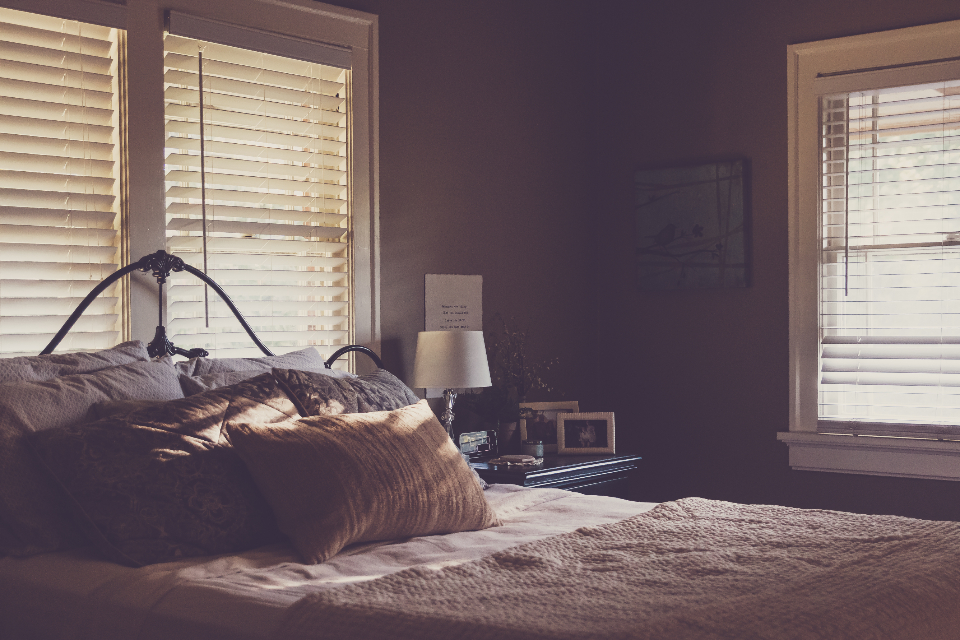
Watch television in a pitch-dark bedroom and the screen becomes the only light source in the room — a bright rectangle floating in black. Your eyes keep adapting back and forth between the two extremes, which is why an hour of nighttime viewing leaves them feeling gritty and the picture itself looks harsher than it did at noon. Bias lighting — a soft, dim wash of light behind the panel — flattens that contrast, costs about the price of a pizza, and takes fifteen minutes to install. It is the least glamorous bedroom lighting upgrade with the most noticeable payoff.
Why a pitch-dark room makes TV harder to watch
Human vision is built to judge brightness relative to surroundings, not in absolute terms. When the wall around a TV is pure black, the screen has to look bright by comparison — and it does, uncomfortably so. Display engineers have formalized this for decades: a surround at roughly 10 percent of the screen’s white level makes the picture both more comfortable and perceptually better, improving apparent contrast and color instead of washing it out the way room lights would.
The bedroom is the worst-case version of this problem. Living rooms usually have some ambient light; a bedroom at midnight has none, and the screen fills in for it. The gritty, tired-eyes feeling after a movie is not the content’s fault — it is your visual system pumping adaptation up and down between a 200-nit panel and a 0-nit wall for two hours.
Bias lighting ends the swing. The wall behind the panel glows softly, your pupils settle at one adaptation level, and the picture stops feeling like it is stabbing out of the dark.
The two specs that decide everything: intensity and color
Get these two right and any strip works. Get them wrong and no brand name will save the setup.
Intensity first. The wash behind the panel should sit just above the threshold of visibility — bright enough that the wall is no longer black, dim enough that you can still see the wall’s texture. In practice, strips with a built-in dimmer set to their lowest two or three steps get there. If the glow throws clear shadows of objects on the shelf, it is too bright. If the wall reads pure black with the TV off, it is too dim.
Color is a genuine fork in the road. Two defensible answers exist and they serve different goals:
- 6500K neutral white matches the white point of filmed content, so colors on screen stay true. This is the calibration answer.
- 2200K amber mismatches the picture slightly but protects your evening wind-down, because cool light at night pushes harder on the wavelengths your body clock responds to. This is the sleep answer.
Truth be told, most bedroom viewers should take the amber option — a slight color shift in the third hour of a movie costs less than a suppressed melatonin curve does. Our light temperature guide walks through the full evening timeline if you want to set this deliberately.
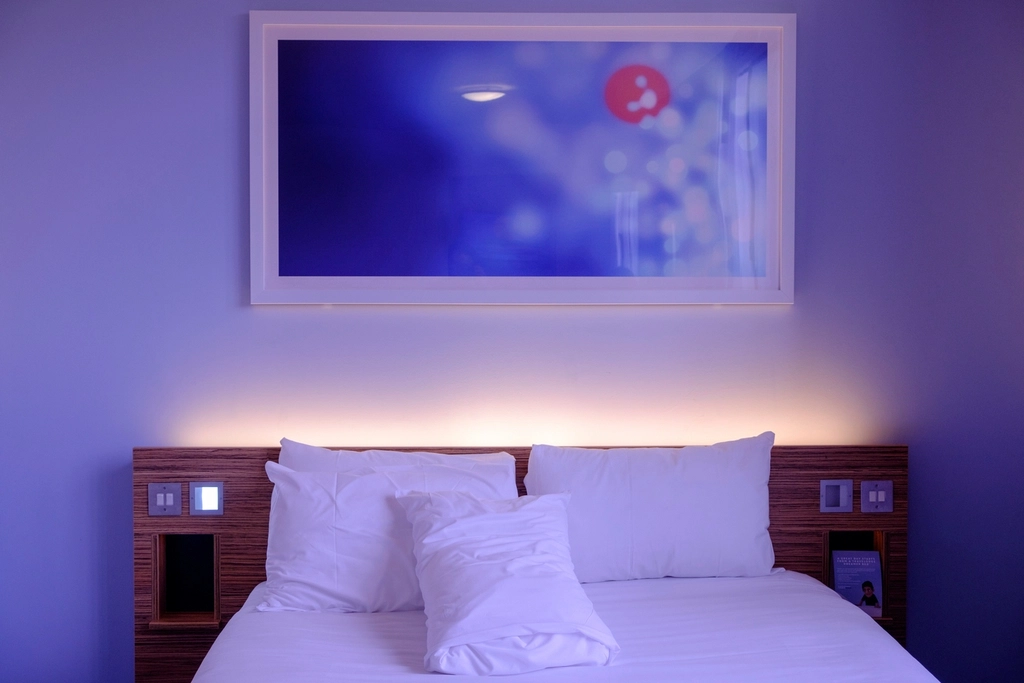
Mounting the strip so you never see it directly
The install has one rule: the LEDs themselves must stay invisible. You are lighting the wall, not the strip.
Mount the strip on the back of the panel near the bottom edge, pointing backward into the gap between TV and wall. The glow should spill onto the wall and wrap around the sides of the screen — roughly 2 to 4 inches of visible halo around the panel is the target. On a wall-mounted TV with a 1-to-2-inch gap, a standard strip taped to the rear edge does this on its own.
Power is easier than it looks: most bedroom strips run on USB, and any TV made in the last decade has a USB port that switches off with the screen. Plug in there and the bias light turns on and off with the TV automatically — no switch, no routine, nothing to forget. This is the one place where a basic strip beats the app-controlled kind; a generic USB LED strip has fewer settings to get wrong and fewer reasons to glow when the screen is off. Size the strip to cover the full width of the panel; a short strip in the middle creates a hot spot behind the TV and dark corners beside it.
One finish detail matters more than price: a strip with a milky diffuser cover spreads the light into an even line, while bare LEDs show as individual dots on the wall. This single feature separates a decent result from a cheap-looking one.
When bias lighting will not fix the problem
Bias lighting fixes contrast between screen and wall. It does nothing for the other two usual suspects. If the picture still feels harsh, check the TV’s own brightness setting first — panels shipped in “vivid” mode run far brighter than any dark room needs, and dropping to cinema mode solves what no backlight can. And if a window or a bedside lamp reflects in the screen, that is glare, a different animal that bias lighting cannot touch; move the lamp or add a curtain instead.
Used for what it does well, though, it is the quiet upgrade. The room looks softer in photos, the movie feels less punishing, and nothing about it announces itself — which is exactly what a bedroom light should do. For the bigger picture of how this piece fits among the room’s other sources, see the four layers of bedroom light.
Frequently asked
- Should the bias light match the TV's color?
- If you care about picture accuracy, yes — content is mastered to a neutral 6500K white, so a matching backlight keeps colors looking right. In a bedroom used mainly for late-night viewing, many people deliberately go warmer and accept the slight color shift as the price of better sleep.
- Can I use any cheap LED strip for this?
- Mostly yes, as long as it dims low and has an even diffused cover. Bare LEDs read as a row of dots on the wall and defeat the purpose, so a strip with a milky silicone or channel cover matters more than the brand.
- Does bias lighting actually reduce eye strain?
- The mechanism is well understood — it softens the contrast between a bright screen and a dark surround — and viewer reports consistently favor it. It is a twenty-dollar experiment, so treat claims of medical precision with skepticism but try it for a week.