Buying Guides
Best Light Temperature for Every Hour of the Evening
If you buy through links on this page we may earn a commission at no extra cost to you.
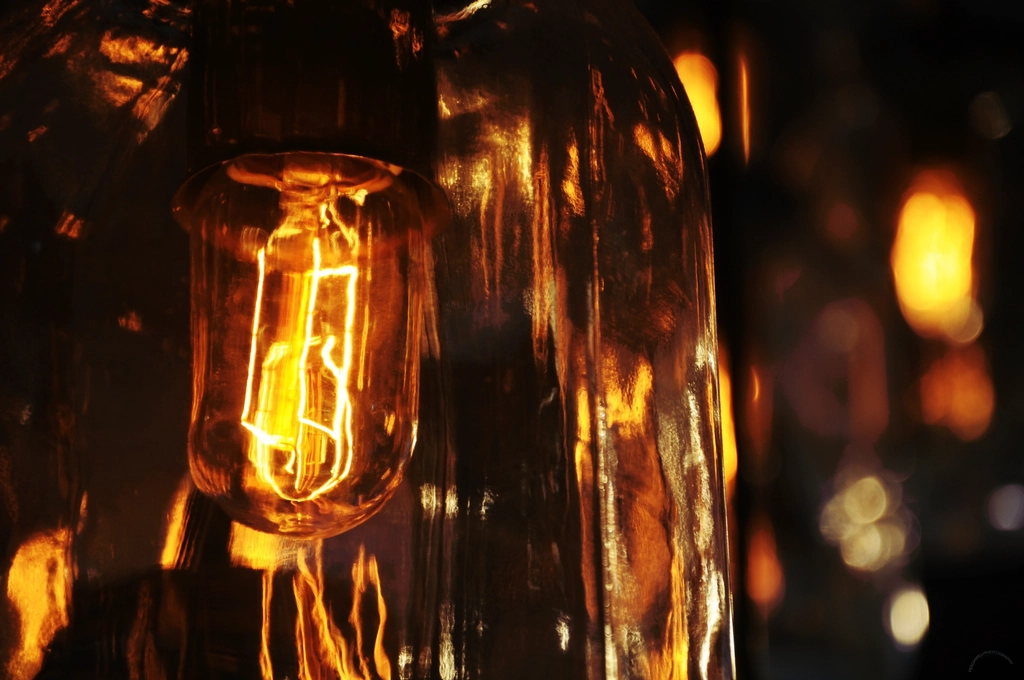
Your bedroom does not actually need one color temperature. It needs a small sequence: something neutral enough to fold laundry by at seven, warmer as the evening slows, and something close to candlelight for the last hour. Set that sequence up once and the room runs itself every night — no willpower, no fiddling with an app before bed.
The evening, hour by hour
| Time | Color temperature | Feel |
|---|---|---|
| 6–8 pm | 3000K | Full brightness, task-ready |
| 8–10 pm | 2700K | Relaxed but functional |
| 10–11 pm | 2400K and below | Low, winding down |
| Final 30 minutes | 1900–2200K | Minimal, amber |
The dinner hour tolerates 3000K because you are still doing chores, and nobody notices the missing amber while a basket of laundry needs folding. Around eight, drop to the 2700K that most warm bulbs ship with. The serious move happens in the last hour: below 2400K, the blue content of the light falls off a cliff, and that blue is precisely what pushes your body clock toward daytime. The full head-to-head between the two most common warm whites is covered in our 2700K vs 3000K comparison.
Brightness rides along with color in this plan, and the pairing is deliberate. A dim 4000K bulb still nudges the brain toward daytime more than a bright 2200K one — the wavelength does the biological work, while the wattage only sets the mood. That is also why the plan survives sloppy execution: miss an hour, or land between two temperatures, and the evening still trends in the right direction. The table is a map, not a stopwatch — clocks differ, households differ, and the amber rule is the only part worth defending to the minute. Direction is the requirement, not perfection.
What we look for in a tunable evening setup
A range that truly reaches amber. Plenty of bulbs advertised as tunable stop at 2700K on the warm end — fine for eight o’clock, useless at eleven. The warm floor to look for is 2200K or lower.
Schedules that fire without you. A scene that runs on the clock every night beats a scene you tap from the phone, because the whole point is removing the decision. If the schedule needs three taps to arm, it stops being used within a month.
Sane behavior after a power cut. The bulb should come back on to a modest warm default, not blind you with a 4000K flood at two in the morning.
Low-end dimming quality. The final hour is a brightness question as much as a color question. A bulb that strobes or drops off below ten percent fails the timeline at its most important step.
Coverage across the fixtures you actually use. A beautiful schedule on one lamp is worth little if the ceiling light snaps on at 4000K the moment someone walks in. Count the fixtures the room really runs after six, then bring them into the plan or swap their bulbs — a timeline with one rebel fixture reads as two rooms disagreeing through a doorway.
Honestly, the app is where most of these products win or lose: a bulb with a beautiful range and a clumsy scheduling screen gets ignored by February.
Three ways to build the sequence
Tunable smart bulbs cover the entire timeline in one fixture. You write the schedule once — 3000K at six, 2700K at eight, amber by ten — and never think about it again. Setup costs one evening and $12 to 20 per bulb; multiply by the lamps the room actually uses and the whole setup still costs less than one designer fixture.
Warm-dim bulbs do the drift automatically: 3000K at full brightness, sliding toward 2200K as you dim, with no app and no schedule. They run on an ordinary dimmer, which makes them the choice for lamps you already love. The physics behind that drift is explained in our kelvin guide.
Two separate lamps — a 2700K table lamp for most of the evening plus an amber plug-in night light for the last stretch — cost under $40 combined and never touch Wi-Fi. The old-fashioned option is embarrassingly effective.
The three routes also mix. A warm-dim bulb in the reading lamp, an amber night light along the baseboard and a plain 2700K bulb overhead covers most of the timeline for well under $50, with no app anywhere in the house — the honest setup for anyone who has abandoned a smart-home project before and does not want a repeat.
When a single warm bulb is enough
Small bedrooms, rentals and people who resent every app can compress the timeline into one decision: a 2700K bulb, dimmed low after ten, in a lamp you can reach without sitting up. You give up the amber finale and gain a room that behaves the same way every night with zero configuration. Hotel designers arrived at the same answer — one source, low, warm and within reach of the pillow, which is why a single dimmed lamp in a good hotel room feels right where three bright ceiling spots do not.
If you would rather zoom out and plan the whole room — layers, fixtures, budget — the one-afternoon lighting plan walks through it step by step.
The sequence matters more than the hardware. Pick whichever of the three routes you will actually follow, set it, and let the sunset do the rest of the work.
The picks
Tunable-white smart bulb
Generic contemporary · $12-20 · Rated 4.5/5
The most complete way to run the full evening timeline: a warm floor near 2200K, time-based scenes and a low end that stays usable instead of strobing.
Best for: Evening routines that should run on a schedule
- Reaches 2200K at the warm end, not just 2700K
- Time-based scenes fire without the phone in hand
- Dims smoothly to a genuine nightlight level
- Setup takes one evening and a working app account
- Warm end varies noticeably between brands
Warm-dim LED bulb
Generic contemporary · $8-14 · Rated 4.4/5
Automatic color drift with zero apps: 3000K at full brightness sliding toward 2200K as you dim, on whatever dimmable circuit the lamp already uses.
Best for: People who dim rather than schedule
- Color shift follows the dimmer, no setup at all
- Works with an ordinary wall dimmer or touch lamp
- The drift mimics how old incandescent bulbs behaved
- Needs a dimmer that gets along with LEDs
- Peak output runs lower than standard bulbs
Amber plug-in night light
Generic contemporary · $10-16 · Rated 4/5
The last-hour specialist: a dusk-triggered amber glow covering exactly the window where tunable bulbs are least convincing.
Best for: The final 30 minutes before lights out
- 1900K-class amber that spares the evening hormone window
- Dusk sensor means it runs itself
- Costs less than one fancy bulb
- Covers only the final hour, not the full evening
- Some models ship without brightness adjustment
| Model | Warm end | Control | Setup | Covers | Price |
|---|---|---|---|---|---|
| Tunable-white smart bulb | 2200K | App scenes + schedule | One evening | Full timeline | $12-20 |
| Warm-dim LED bulb | 2200K | Dimmer position | None | Dimming hours | $8-14 |
| Amber night light | 1900K | Dusk sensor | Plug in | Last hour | $10-16 |
Frequently asked
- Do I need smart bulbs to follow an evening temperature plan?
- No. Warm-dim bulbs shift color automatically as they dim, and a two-lamp setup — one warm table lamp plus one amber night light — approximates the full timeline for under $40. Smart bulbs simply automate it.
- Is 4000K ever acceptable in a bedroom?
- In the morning, arguably: a cooler light at wake-up helps you feel alert. After mid-afternoon, 4000K works against everything the bedroom is trying to do. If the room doubles as an office, keep the cool light there.
- What temperature should a wake-up light use?
- Most purpose-built wake-up lights climb from deep red-orange up to a bright warm white near 3000K. That trajectory matters more than the peak number — it mimics a real sunrise instead of snapping on.